

Epoxy glass mat is a composite material that combines the strength of glass fibers with the versatility of epoxy resin. As a leading supplier of epoxy glass mat products, I am often asked whether this material can be molded into complex shapes. In this blog post, I will explore the capabilities of epoxy glass mat in shaping and provide insights based on our experience in the industry.
Understanding Epoxy Glass Mat
Epoxy glass mat is made by impregnating glass fibers with epoxy resin. The glass fibers provide high strength and stiffness, while the epoxy resin acts as a binder, holding the fibers together and protecting them from environmental factors. This combination results in a material that is lightweight, corrosion-resistant, and has excellent electrical insulation properties.
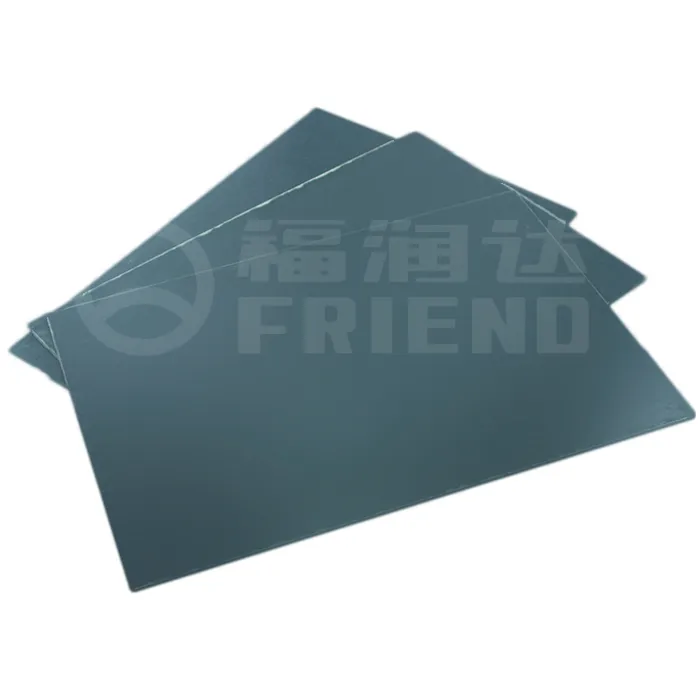
There are different types of epoxy glass mat products available, each with its own unique characteristics and applications. For example, our F862 (EPGM306) Epoxy Glass Mat Products are known for their high mechanical strength and good chemical resistance, making them suitable for a wide range of industrial applications. Our F897 (Magnetic) Magnetic Laminate is designed for applications where magnetic properties are required, such as in electrical transformers and motors. And our F863 (EPGM203) Epoxy Glass Mat Products offer a good balance of strength and flexibility, making them ideal for applications that require complex shapes.
Molding Capabilities of Epoxy Glass Mat
One of the key advantages of epoxy glass mat is its ability to be molded into various shapes. The molding process involves shaping the material while it is in a semi - liquid or pliable state and then allowing it to cure. There are several molding techniques that can be used with epoxy glass mat, each with its own advantages and limitations.
Compression Molding
Compression molding is a widely used technique for molding epoxy glass mat. In this process, a pre - cut piece of epoxy glass mat is placed in a heated mold cavity. The mold is then closed, and pressure is applied to force the material to conform to the shape of the mold. The heat and pressure cause the epoxy resin to flow and cure, resulting in a solid, shaped part.
Compression molding is suitable for producing parts with relatively simple to moderately complex shapes. It can achieve high levels of dimensional accuracy and surface finish. However, the tooling costs for compression molding can be high, especially for complex shapes, as the mold needs to be precisely designed and machined.
Vacuum Bag Molding
Vacuum bag molding is another popular method for molding epoxy glass mat. In this process, the epoxy glass mat is placed on a mold surface and covered with a vacuum bag. The air is then removed from the bag, creating a vacuum that presses the material against the mold. The part is then cured, either at room temperature or with the application of heat.
Vacuum bag molding is particularly useful for producing large, flat or gently curved parts. It can also be used to produce parts with some degree of complexity, as the vacuum pressure helps the material to conform to the mold surface. This method is more cost - effective than compression molding for low - volume production, as the tooling costs are relatively low.
Resin Transfer Molding (RTM)
Resin transfer molding is a more advanced technique for molding epoxy glass mat. In RTM, a dry glass mat preform is placed in a closed mold. The epoxy resin is then injected into the mold under pressure, filling the cavity and impregnating the glass fibers. The resin is then cured to form a solid part.
RTM is suitable for producing parts with complex shapes and high levels of detail. It can achieve excellent fiber - to - resin ratios, resulting in parts with high strength and stiffness. However, the equipment and process for RTM are more complex and expensive than compression molding and vacuum bag molding.
Factors Affecting the Molding of Complex Shapes
While epoxy glass mat can be molded into complex shapes, there are several factors that need to be considered to ensure successful molding.
Fiber Orientation
The orientation of the glass fibers in the epoxy glass mat can have a significant impact on the molding process and the properties of the final part. In complex shapes, it is important to ensure that the fibers are properly aligned to follow the contours of the mold. If the fibers are not oriented correctly, it can lead to issues such as fiber wrinkling, voids, and uneven mechanical properties in the part.
Resin Flow
The flow of the epoxy resin during the molding process is crucial for achieving a good - quality part. In complex shapes, the resin needs to flow evenly through the glass mat to fill all the cavities and corners of the mold. Factors such as the viscosity of the resin, the temperature, and the pressure applied during molding can affect the resin flow.
Curing Process
The curing process of the epoxy resin is also an important factor. If the curing is not carried out properly, it can result in a part with poor mechanical properties or dimensional instability. In complex shapes, it is important to ensure that the curing is uniform throughout the part, as uneven curing can lead to warping and cracking.
Examples of Complex Shapes Molded from Epoxy Glass Mat
There are many examples of complex shapes that have been successfully molded from epoxy glass mat. In the aerospace industry, epoxy glass mat is used to produce components such as wingtips, fairings, and interior panels. These parts often have complex aerodynamic shapes and require high strength - to - weight ratios.
In the automotive industry, epoxy glass mat is used for parts such as body panels, bumpers, and engine covers. These parts need to be molded into complex shapes to fit the design of the vehicle and provide protection and functionality.
Conclusion
In conclusion, epoxy glass mat can indeed be molded into complex shapes using various molding techniques. The choice of molding technique depends on factors such as the complexity of the shape, the production volume, and the required properties of the final part. As a supplier of epoxy glass mat products, we have the expertise and experience to help our customers select the right material and molding process for their specific applications.

If you are interested in using epoxy glass mat for your projects and need more information about our products or the molding process, please feel free to contact us for procurement and further discussions. We look forward to working with you to meet your specific needs.
References
- ASM Handbook, Volume 21: Composites. ASM International.
- Strong, A. B. (2008). Plastics: Materials and Processing. Pearson Prentice Hall.
- Mallick, P. K. (2007). Fiber - Reinforced Composites: Materials, Manufacturing, and Design. CRC Press.