


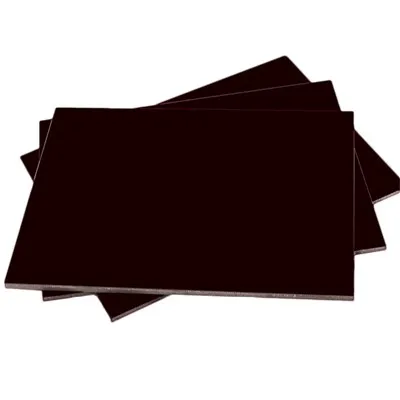
Special Resin Glass Fabric Laminate
Founded in 1996, Beijing Friend Group is headquartered in Beijing Yizhuang Economic and Technological Development Zone. The company's main products include epoxy glass laminated sheets, phenolic cotton laminated sheets, phenolic paper laminated sheets, polyester molded products, laminated rods, composite profiles, etc.
-
![SIGC 202 Silicone Glass Fabric Laminated Sheets]() SIGC 202 Silicone Glass Fabric Laminated SheetsSIGC 202(G7) is a laminate sheet made from high-performance silicone resin and a woven fiberglass substrate. Iflame-resistant materialread more
SIGC 202 Silicone Glass Fabric Laminated SheetsSIGC 202(G7) is a laminate sheet made from high-performance silicone resin and a woven fiberglass substrate. Iflame-resistant materialread more -
![G7 (F870CP) Silicone Glass Fabric Laminated Sheets]() G7 (F870CP) Silicone Glass Fabric Laminated SheetsF870CP, similar to NEMA G7,SIGC 202 is a laminate sheet made from high-performance silicone resin and a woven fiberglass substrate. It is a flame-resistant material featuring a low dissipation...read more
G7 (F870CP) Silicone Glass Fabric Laminated SheetsF870CP, similar to NEMA G7,SIGC 202 is a laminate sheet made from high-performance silicone resin and a woven fiberglass substrate. It is a flame-resistant material featuring a low dissipation...read more -
![F878 Synthetic Stone]() F878 Synthetic StoneF878 is a composite material which is made by glass fiber and high temperature resin. It is used for PCB board assembly, including SMT reflow and wave soldering. It has excellent mechanical...read more
F878 Synthetic StoneF878 is a composite material which is made by glass fiber and high temperature resin. It is used for PCB board assembly, including SMT reflow and wave soldering. It has excellent mechanical...read more -
![F871 (Bismaleimide ) Modified Bismaleimide Glass Fabric Laminated Sheets]() F871 (Bismaleimide ) Modified Bismaleimide Glass Fabric L...Thermal Class:H (180℃) It is commonly used for mechanical and electrical purposes, F871 is used for motor insulation, like slot wedges, carbon brush brackets, and other insulation structural parts...read more
F871 (Bismaleimide ) Modified Bismaleimide Glass Fabric L...Thermal Class:H (180℃) It is commonly used for mechanical and electrical purposes, F871 is used for motor insulation, like slot wedges, carbon brush brackets, and other insulation structural parts...read more -
![F872 (Bismaleimide) Modified Bismaleimide Glass Fabric Laminated Sheets]() F872 (Bismaleimide) Modified Bismaleimide Glass Fabric La...F872 Bismaleimide has high mechanical and dielectric properties, good heat resistance and radiation resistance, similar to F871 but with N grade thermal resistance. It is commonly used for...read more
F872 (Bismaleimide) Modified Bismaleimide Glass Fabric La...F872 Bismaleimide has high mechanical and dielectric properties, good heat resistance and radiation resistance, similar to F871 but with N grade thermal resistance. It is commonly used for...read more -
![G3 (F875) Benzoxazine Glass Fabric Laminated Sheets]() G3 (F875) Benzoxazine Glass Fabric Laminated SheetsG3 F875 benzoxazine glass fiber laminate is a high performance composite material made of benzoxazine resin combined with glass fiber. Due to its excellent physical and chemical properties, this...read more
G3 (F875) Benzoxazine Glass Fabric Laminated SheetsG3 F875 benzoxazine glass fiber laminate is a high performance composite material made of benzoxazine resin combined with glass fiber. Due to its excellent physical and chemical properties, this...read more -
![G5 (F873) Melamine Glass Fabric Laminated Sheets]() G5 (F873) Melamine Glass Fabric Laminated SheetsG5 (F873), similar to NEMA G5, made by impregnating alkali-free glass cloth with melamine resin and then hot-pressing. This product has high mechanical properties, electrical properties, and...read more
G5 (F873) Melamine Glass Fabric Laminated SheetsG5 (F873), similar to NEMA G5, made by impregnating alkali-free glass cloth with melamine resin and then hot-pressing. This product has high mechanical properties, electrical properties, and...read more -
![G9 (F874) Melamine Glass Fabric Laminated Sheets]() G9 (F874) Melamine Glass Fabric Laminated SheetsF874, similar to NEMA G9, is a kind of high performance composite material which is composed of melamine resin and glass fiber cloth. Because of its excellent physical and chemical properties, it...read more
G9 (F874) Melamine Glass Fabric Laminated SheetsF874, similar to NEMA G9, is a kind of high performance composite material which is composed of melamine resin and glass fiber cloth. Because of its excellent physical and chemical properties, it...read more


Why choose us?
Professional Team
Staffed by a team of highly skilled professionals, including 2 Ph.D. holders and 9 master's degree experts, the center is at the forefront of technological innovation.
Advanced Equipment
The Friend Group Testing Center is equipped with a comprehensive suite of advanced testing instruments, meeting the highest standards for insulation material testing.
Quality Control
With its unwavering dedication to research, technological advancement, and quality assurance, the Beijing Friend Group R&D Center continues to set new benchmarks in the industry, reinforcing its position as a leader in insulation materials and new material innovation.
Sales Market
Our products are now exported to dozens of countries across Asia, Europe, Africa, North and South America, and Oceania, earning widespread recognition and trust from clients worldwide.
Benefits of Special Resin Glass Fabric Laminate
Tensile strength and modulus
Glass cloth epoxy laminates boast impressive tensile strength, typically ranging from 200 to 400 MPa, depending on the specific grade and composition. This high strength-to-weight ratio makes them ideal for applications requiring robust yet lightweight materials. The tensile modulus, a measure of stiffness, can vary between 15 to 25 GPa, providing excellent rigidity without compromising flexibility.
Flexural properties
The flexural strength of glass cloth epoxy laminates is another noteworthy characteristic, often exceeding 300 MPa. This property ensures the material can withstand bending forces without failure, crucial in applications such as circuit boards and structural components. The flexural modulus, typically in the range of 18 to 28 GPa, contributes to the material's ability to resist deformation under load.
Impact Resistance
Glass cloth reinforcement significantly enhances the impact resistance of epoxy laminates. The Izod impact strength can range from 500 to 800 J/m, depending on the laminate thickness and glass content. This toughness is vital in protecting electronic components from mechanical shocks and vibrations, ensuring long-term reliability in demanding environments.
Product Specifications
|
Dimensions (LxW) |
1020*1220 |
MM |
|
1020*2040 |
MM |
|
|
1220*2470 |
MM |
|
|
Density |
1.80-2.00 |
g/cm3 |
|
Electric strength perpendicular to laminations (in oil, 90±2℃), 0.5 mm in thickness |
≥8.6 |
kV/mm |
|
Breakdown voltage parallel to laminations(in oil, 90±2℃) |
≥35 |
kV |
|
Insulation resistance after 24 h water immersion, D-24/23 |
≥1.0×10¹⁰ |
Ω |
|
Water absorption rate, 2.5 mm in thickness |
≤38 |
mg |
|
Permittivity, 1 MHz |
≤5.50 |
- |
|
Dissipation factor, 1 MHz |
≤0.03 |
- |
|
Arc resistance |
≥180 |
s |
|
Flammability |
V-0 |
CLASS |
|
Thermal resistance |
H |
CLASS |
Application of Special Resin Glass Fabric Laminate

Electrical insulation
One of the primary applications of epoxy glass fabric laminated sheets is electrical insulation. They are widely used as insulation barriers in electrical machinery, switchgears, and transformers. These sheets provide reliable insulation, preventing the flow of electric current and protecting the equipment from short circuits.

Printed circuit boards
Epoxy glass fabric laminated sheets find extensive use in the manufacturing of printed circuit boards (PCBs). They serve as the substrate material on which electronic components are mounted. The excellent electrical insulation properties of these sheets help in preventing short circuits and ensuring the smooth functioning of electronic devices.

Transformers and electrical equipment
Epoxy glass fabric laminated sheets are also used in the construction of transformers and other electrical equipment. They provide insulation between different windings and ensure the efficient transfer of electricity. The thermal stability of these sheets allows them to withstand the high temperatures generated in transformers during operation.
Aerospace industry
In the aerospace industry, epoxy glass fabric laminated sheets are utilized for various applications. They are used in the construction of aircraft panels, control systems, and insulation for electrical components. The lightweight nature of these sheets, combined with their excellent electrical properties, makes them an ideal choice for aerospace applications.
How To Cooperate With Us

Packaging
Regular packing, protected by pallet.
Depending on the requirement of buyers.


Certifications


FAQ
We're professional special resin glass fabric laminate manufacturers and suppliers in China, specialized in providing high quality customized service. We warmly welcome you to buy cheap special resin glass fabric laminate for sale here and get free sample from our factory. For price consultation, contact us.
large quantity special resin glass fabric laminate, small quantity special resin glass fabric laminate, marine special resin glass fabric laminate