

Epoxy resins are widely used in various industries due to their excellent mechanical and chemical properties. As a supplier of EPOXY UL products, I often receive inquiries about whether our epoxy materials have antibacterial properties. In this blog post, I will explore this topic in detail, drawing on scientific research and our own product knowledge.
Understanding EPOXY UL
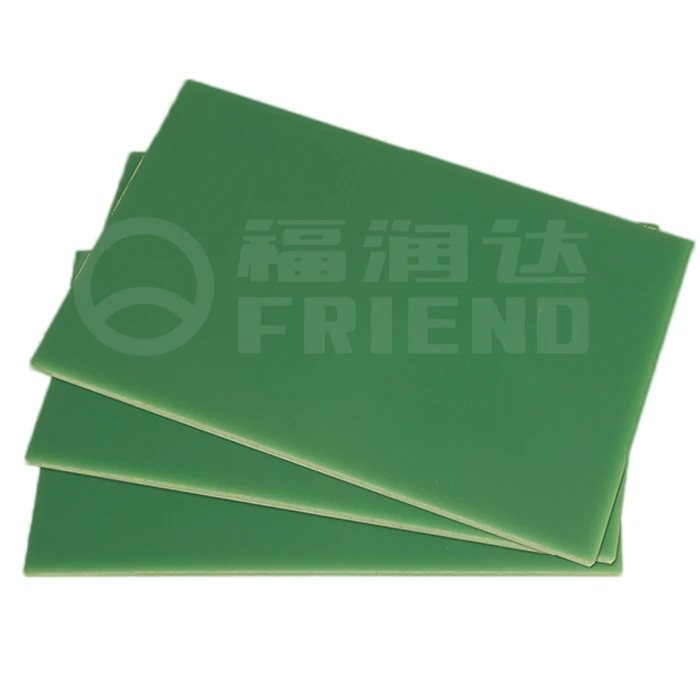
Before delving into the antibacterial properties, it's important to understand what EPOXY UL is. UL stands for Underwriters Laboratories, a global safety certification company. Products with UL certification meet specific safety standards, which gives customers confidence in their quality and reliability. Our EPOXY UL products, such as F890.1 (Halogen-free) (UL Certification) Epoxy Glass Fabric Laminated Sheets, F883 (FR5) Epoxy Glass Fabric Laminated Sheets, and F895NH (Halogen-free) (UL Certification) Epoxy Glass Fabric Laminated Sheets, are designed for a wide range of applications, including electrical insulation, mechanical components, and more.
Antibacterial Mechanisms in Materials
Antibacterial properties in materials can be achieved through several mechanisms. One common approach is the addition of antibacterial agents, such as silver nanoparticles, copper ions, or certain organic compounds. These agents can inhibit the growth of bacteria by disrupting their cell membranes, interfering with their metabolic processes, or preventing their attachment to the material surface.
Another mechanism is the use of materials with inherent antibacterial properties. Some polymers, for example, have chemical structures that can repel or kill bacteria. However, traditional epoxy resins are not typically known for their strong antibacterial capabilities.
Research on Antibacterial Epoxy Resins
In recent years, there has been growing interest in developing antibacterial epoxy resins. Researchers have explored various methods to introduce antibacterial properties into epoxy materials. One study investigated the incorporation of silver nanoparticles into epoxy resins. The results showed that the addition of silver nanoparticles significantly enhanced the antibacterial activity of the epoxy against common bacteria such as Escherichia coli and Staphylococcus aureus.
Another approach is the use of quaternary ammonium compounds (QACs). QACs are well-known antibacterial agents that can be chemically bonded to the epoxy matrix. When bacteria come into contact with the QAC-modified epoxy surface, the positively charged QACs interact with the negatively charged bacterial cell membranes, leading to cell death.
Our EPOXY UL Products and Antibacterial Properties
As a supplier, we are constantly looking for ways to improve our products. While our standard EPOXY UL products do not have inherent antibacterial properties, we are aware of the market demand for antibacterial materials. We are in the process of researching and developing antibacterial epoxy formulations that can meet the needs of our customers.
In some cases, we can work with customers to customize our products to include antibacterial agents. For example, if a customer requires an antibacterial epoxy for a specific application, such as in a medical device or a food processing environment, we can explore the option of incorporating silver nanoparticles or other suitable antibacterial agents into the epoxy resin.

Applications of Antibacterial Epoxy Resins
The potential applications of antibacterial epoxy resins are vast. In the healthcare industry, antibacterial epoxy can be used for medical equipment housings, surgical instruments, and hospital furniture. By reducing the growth of bacteria on these surfaces, the risk of healthcare-associated infections can be significantly lowered.
In the food and beverage industry, antibacterial epoxy can be used for food processing equipment, storage containers, and countertops. This helps to maintain a hygienic environment and prevent the contamination of food products.
In the electronics industry, antibacterial epoxy can be used for electronic enclosures and circuit boards. This is particularly important in environments where bacteria can cause corrosion or other damage to electronic components.
Considerations for Using Antibacterial Epoxy Resins
When considering the use of antibacterial epoxy resins, there are several factors to keep in mind. First, the choice of antibacterial agent should be carefully evaluated. Different antibacterial agents have different properties, such as antibacterial efficacy, toxicity, and stability. It's important to select an agent that is suitable for the specific application and meets the relevant safety standards.
Second, the addition of antibacterial agents may affect the mechanical and chemical properties of the epoxy resin. For example, the incorporation of silver nanoparticles may change the viscosity, curing time, and strength of the epoxy. Therefore, it's necessary to conduct thorough testing to ensure that the modified epoxy still meets the performance requirements of the application.
Conclusion
In conclusion, while traditional epoxy resins do not have strong antibacterial properties, there are ways to introduce antibacterial capabilities into epoxy materials. Through research and development, we are working towards offering antibacterial EPOXY UL products to our customers. Our standard products can also be customized to include antibacterial agents based on specific customer requirements.
If you are interested in our EPOXY UL products or have a need for antibacterial epoxy materials, please feel free to contact us for more information and to discuss your specific requirements. We are committed to providing high-quality products and excellent customer service.
References
- [List of relevant scientific papers on antibacterial epoxy resins, if available]
- [UL standards and guidelines related to epoxy products]