

As a seasoned supplier of glass mat products, I understand the critical importance of ensuring the quality of our offerings. Glass mat products are widely used in various industries, including automotive, construction, and electronics, where their performance can significantly impact the end - product's functionality and durability. In this blog, I will share some essential methods to test the quality of glass mat products.
Physical Appearance Inspection
The first step in assessing the quality of glass mat products is a visual inspection. This simple yet effective method can reveal many potential issues. Check for any visible defects such as cracks, holes, or uneven surfaces. A high - quality glass mat should have a uniform texture and color. Any signs of discoloration might indicate improper manufacturing processes or exposure to harsh environmental conditions during storage or transportation.
The thickness of the glass mat is also a crucial factor. Use a caliper to measure the thickness at multiple points across the mat. Variations in thickness can lead to inconsistent performance in applications. For example, in composite materials, an uneven glass mat thickness may result in areas of different strength and stiffness. A reliable glass mat should have a thickness within a specified tolerance range, which is typically provided by the manufacturer.
Tensile Strength Testing
Tensile strength is one of the most important mechanical properties of glass mat products. It measures the maximum amount of tensile stress that the material can withstand before breaking. To conduct a tensile strength test, a sample of the glass mat is cut into a specific shape, usually a dumbbell - shaped specimen according to international standards such as ASTM D638 or ISO 527.
The specimen is then placed in a universal testing machine. The machine gradually applies a pulling force to the specimen at a constant rate until it breaks. During the test, the machine records the force applied and the corresponding elongation of the specimen. The tensile strength is calculated by dividing the maximum force at break by the original cross - sectional area of the specimen.
A high - quality glass mat should have a consistent and relatively high tensile strength. If the tensile strength is lower than expected, it may indicate problems with the glass fibers' quality, the resin matrix, or the manufacturing process. For instance, poor fiber - resin bonding can lead to premature failure of the glass mat under tensile stress.
Flexural Strength Testing
Flexural strength is another important mechanical property, especially for glass mat products used in applications where bending forces are involved. It measures the ability of the material to resist deformation when subjected to a bending load. Similar to tensile strength testing, a sample of the glass mat is prepared according to relevant standards (e.g., ASTM D790 or ISO 178).
The specimen is placed on two supports and a load is applied at the center of the specimen. The test machine measures the maximum load that the specimen can withstand before it fails or reaches a specified deflection. The flexural strength is calculated based on the load, the dimensions of the specimen, and the span between the supports.
In applications such as automotive body panels or structural components, good flexural strength is essential to ensure that the glass mat - based parts can withstand the bending forces encountered during normal use without cracking or breaking.
Chemical Resistance Testing
Glass mat products may be exposed to various chemicals in their end - use applications. Therefore, it is important to test their chemical resistance. This can be done by immersing samples of the glass mat in different chemical solutions for a specified period of time. The chemicals used in the test depend on the intended application. For example, in the automotive industry, glass mat products may need to be resistant to fuels, lubricants, and cleaning agents.
After the immersion period, the samples are removed from the chemical solutions and dried. Then, their physical and mechanical properties are re - evaluated. Changes in weight, dimensions, color, and mechanical properties such as tensile strength and flexural strength can indicate the degree of chemical resistance. A high - quality glass mat should show minimal changes in these properties after exposure to relevant chemicals.

Resin Content Analysis
The resin content in glass mat products plays a vital role in determining their performance. The resin provides the matrix that holds the glass fibers together and transfers loads between them. An appropriate resin content is necessary to achieve the desired mechanical properties, such as strength and stiffness, as well as chemical resistance.
There are several methods to determine the resin content in glass mat products. One common method is the ignition loss method. A sample of the glass mat is weighed accurately, then placed in a furnace at a high temperature (usually around 600 - 800°C) for a specific period of time. The resin in the sample burns off, leaving only the glass fibers. The sample is then weighed again. The resin content is calculated as the difference in weight before and after the ignition, divided by the original weight of the sample.
The resin content should be within an optimal range. Too little resin may result in poor fiber - to - fiber bonding, leading to reduced mechanical properties. On the other hand, too much resin can increase the weight of the product and may also cause issues such as poor surface finish and longer curing times.
Thermal Stability Testing
Thermal stability is an important consideration for glass mat products, especially in applications where they are exposed to high temperatures. To test thermal stability, a sample of the glass mat is placed in a thermogravimetric analyzer (TGA). The TGA heats the sample at a constant rate in an inert atmosphere (usually nitrogen) and measures the change in its weight as a function of temperature.
As the temperature increases, the resin in the glass mat may start to decompose, resulting in a weight loss. The onset temperature of decomposition and the rate of weight loss are important parameters. A high - quality glass mat should have a relatively high onset temperature of decomposition and a slow rate of weight loss. This indicates that the material can maintain its integrity and performance at elevated temperatures.
In addition to TGA, differential scanning calorimetry (DSC) can also be used to study the thermal behavior of glass mat products. DSC measures the heat flow associated with physical and chemical changes in the material as a function of temperature. It can provide information about the glass transition temperature (Tg) of the resin, which is an important parameter for understanding the material's mechanical and physical properties at different temperatures.
Fire Resistance Testing
In many applications, especially in the construction and transportation industries, fire resistance is a critical requirement for glass mat products. Fire resistance testing evaluates the material's ability to resist ignition, flame spread, and heat release.
One common fire resistance test is the UL 94 test, which is widely used in the United States. In this test, a sample of the glass mat is mounted vertically and exposed to a small flame for a specified period of time. The test assesses the material's ability to self - extinguish after the flame is removed and the amount of burning drips. The material is classified into different ratings, such as V - 0, V - 1, and V - 2, based on its performance in the test.
Another important fire - related parameter is the limiting oxygen index (LOI). The LOI is the minimum concentration of oxygen in a mixture of oxygen and nitrogen that will support combustion of the material. A higher LOI value indicates better fire resistance. The LOI test is conducted by gradually reducing the oxygen concentration in the gas mixture surrounding a sample of the glass mat until the material no longer burns.
Product Examples
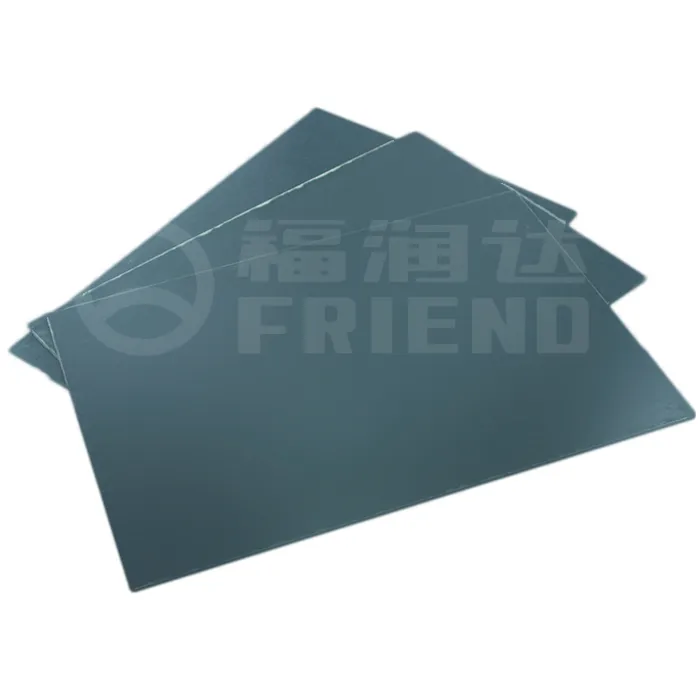
We offer a range of high - quality glass mat products, such as F897 (Magnetic) Magnetic Laminate, F862 (EPGM306) Epoxy Glass Mat Products, and F863 (EPGM203) Epoxy Glass Mat Products. These products have been rigorously tested using the methods described above to ensure their quality and performance.
Conclusion
Testing the quality of glass mat products is a comprehensive process that involves multiple aspects, from physical appearance inspection to various mechanical, chemical, and thermal tests. By conducting these tests, we can ensure that our glass mat products meet the high - quality standards required by different industries.
If you are in the market for glass mat products and are interested in discussing your specific requirements, we are here to help. Whether you need products for automotive, construction, or electronics applications, our team of experts can provide you with detailed information and solutions. Contact us to start a procurement discussion and find the best glass mat products for your needs.
References
- ASTM International. ASTM D638 - 14 Standard Test Method for Tensile Properties of Plastics.
- ISO International Organization for Standardization. ISO 527 - 2:2012 Plastics - Determination of Tensile Properties - Part 2: Test Conditions for Moulding and Extrusion Plastics.
- ASTM International. ASTM D790 - 17 Standard Test Methods for Flexural Properties of Unreinforced and Reinforced Plastics and Electrical Insulating Materials.
- UL Standards. UL 94 Standard for Tests for Flammability of Plastic Materials for Parts in Devices and Appliances.