

Hey there! I'm a supplier of UL Certified SMC, and I'm super stoked to walk you through the production processes of UL Certified SMC. UL certification is a big deal in the industry, as it ensures that the product meets strict safety and quality standards. So, let's dive right in and see how this awesome material is made.
Raw Material Preparation
The first step in making UL Certified SMC is getting all the raw materials ready. We're talking about a bunch of different stuff here, like resins, fillers, reinforcements, and various additives.
The resin is the heart of SMC. It's what holds everything together and gives the final product its properties. For UL Certified SMC, we usually use a special type of unsaturated polyester resin. This resin is carefully selected because it has to meet the UL requirements for things like flammability and electrical insulation.
Fillers are added to the resin to reduce costs and improve certain properties. Common fillers include calcium carbonate and talc. They help to make the SMC more rigid and also give it better dimensional stability.
Reinforcements are crucial for adding strength to the SMC. Glass fibers are the most commonly used reinforcements. These fibers come in different lengths and forms, like chopped strands or continuous mats. The glass fibers are what make SMC so strong and durable, which is why it's used in so many applications where strength is important.
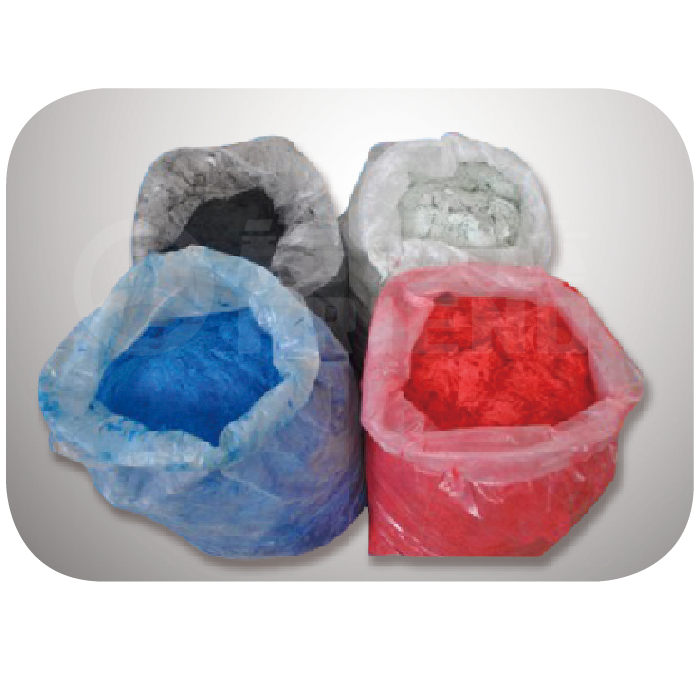
Additives are used to modify the properties of the SMC. For example, we might add a catalyst to speed up the curing process, or a release agent to make it easier to remove the finished product from the mold. There are also additives for things like UV resistance and color.
Once we've got all the raw materials sorted, we mix them together in a special mixer. This mixer has to be really good at blending everything evenly, because any unevenness in the mixture can lead to problems later on. The mixing process is usually done under controlled conditions, like a specific temperature and humidity, to make sure the mixture turns out just right.
Sheet Molding
After the raw materials are mixed, it's time to turn them into sheets. This is done using a sheet molding machine. The machine takes the mixed material and spreads it out into a thin sheet between two layers of polyethylene film. The thickness of the sheet can be adjusted depending on the requirements of the final product.
The sheet molding machine has a series of rollers that press the material into the desired thickness. As the material passes through the rollers, the glass fibers get oriented in a specific direction, which helps to improve the strength of the SMC. The polyethylene film serves as a barrier to protect the SMC sheet from contamination and also makes it easier to handle.
Once the sheet is formed, it's wound onto a roll. These rolls are then stored in a cool, dry place to prevent the material from curing prematurely. The SMC sheets can be stored for several weeks before they're ready to be used in the molding process.
Molding
Now comes the fun part - molding the SMC sheets into the final product. There are several different molding processes that can be used, but the most common one is compression molding.
In compression molding, a pre - cut piece of SMC sheet is placed into a heated mold. The mold is designed to have the exact shape of the final product. The mold is then closed, and pressure is applied to the SMC sheet. The pressure forces the SMC to fill the entire cavity of the mold.
At the same time, the heat from the mold causes the resin in the SMC to cure. Curing is a chemical reaction that turns the resin from a liquid into a solid. The curing process usually takes a few minutes, depending on the size and complexity of the product.
During the curing process, the glass fibers in the SMC become embedded in the cured resin, creating a strong and rigid structure. Once the curing is complete, the mold is opened, and the finished product is removed.
There are other molding processes too, like injection molding and transfer molding. Injection molding is similar to compression molding, but instead of placing a pre - cut sheet into the mold, the SMC is injected into the mold under high pressure. Transfer molding is a bit different in that the SMC is first placed in a transfer pot, and then it's forced into the mold through a runner system.
Post - Molding Operations
After the SMC product is molded, it usually goes through some post - molding operations. One of the most common post - molding operations is trimming. The excess material around the edges of the molded product is removed using a trimming machine. This gives the product a clean and professional look.
Sometimes, the product might need to be drilled or machined to add holes or other features. This is done using standard machining tools, like drills and mills. However, machining SMC can be a bit tricky because of the glass fibers, so special tools and techniques are often used.
Surface finishing is another important post - molding operation. The surface of the SMC product can be sanded, painted, or coated to improve its appearance and performance. For example, a paint or coating can provide additional protection against UV rays and chemicals.
Quality Control
Throughout the entire production process, quality control is of utmost importance. We have a team of quality control experts who are constantly monitoring the production to make sure that everything meets the UL standards.
During the raw material preparation stage, the raw materials are tested to make sure they meet the required specifications. For example, the resin is tested for its viscosity and reactivity, and the glass fibers are tested for their strength and length.
In the sheet molding stage, the thickness and uniformity of the SMC sheets are checked. Any sheets that don't meet the standards are rejected.
During the molding process, the temperature, pressure, and curing time are carefully monitored. The molded products are also inspected for any defects, like cracks, voids, or uneven surfaces. If a product doesn't pass the inspection, it's either re - worked or scrapped.

Applications of UL Certified SMC
UL Certified SMC is used in a wide variety of applications. One of the most common applications is in the automotive industry. SMC is used to make parts like body panels, hoods, and bumpers. Its strength, light weight, and corrosion resistance make it a great choice for these applications.
In the electrical industry, UL Certified SMC is used to make electrical enclosures, switchgear components, and insulators. Its excellent electrical insulation properties and UL certification make it ideal for these applications where safety is a top priority.
The construction industry also uses SMC for things like architectural panels, window frames, and roofing components. SMC's durability and weather resistance make it a popular choice for outdoor applications.
Conclusion
So, there you have it - the production processes of UL Certified SMC. It's a complex and fascinating process that involves a lot of steps and careful attention to detail. As a supplier of UL Certified SMC, I'm really proud of the high - quality products we produce.
If you're in the market for UL Certified SMC, whether it's for automotive, electrical, construction, or any other application, I'd love to talk to you. We can provide you with high - quality SMC products that meet all the UL standards. Just reach out to us, and we can start a conversation about your specific needs.
If you want to learn more about related products, check out these links: BMC Bulk Molding Compound, F621 (GPO - 1) Polyester Glass Mat Products, and F622 (GPO - 3) (UL Certification) Polyester Glass Mat Products.
References
- ASM International. (2008). Engineered Materials Handbook: Composites.
- Strong, A. B. (2008). Plastics: Materials and Processing.
- Morton, J. (2001). Sheet Molding Compounds: A Technical Guide.