

Hey there! As an EPOXY UL supplier, I often get asked about the gloss level of EPOXY UL. So, I thought I'd write this blog to share some insights on this topic.
First off, let's talk about what gloss level actually means. Gloss level refers to the amount of light that is reflected off the surface of a material. It's usually measured in gloss units (GU) using a gloss meter. A high gloss level means the surface reflects a lot of light, giving it a shiny, mirror - like appearance. On the other hand, a low gloss level means the surface scatters more light, resulting in a more matte or dull look.
Now, when it comes to EPOXY UL, the gloss level can vary depending on several factors. One of the main factors is the formulation of the epoxy. Different epoxy formulations can have different chemical compositions, which can affect how light interacts with the surface. For example, some epoxy formulations may contain additives that are designed to either enhance or reduce the gloss level.
Another factor is the curing process. The way the epoxy is cured can also have a significant impact on the gloss level. If the epoxy is cured at a higher temperature or for a longer period of time, it may result in a higher gloss level. Conversely, a lower - temperature or shorter - duration cure may lead to a lower gloss level.
The surface finish of the substrate on which the EPOXY UL is applied also matters. A smooth substrate will generally result in a higher gloss finish, as there are fewer irregularities to scatter the light. In contrast, a rough substrate will cause the light to scatter more, leading to a lower gloss level.
So, what are the typical gloss levels for EPOXY UL products? Well, it really depends on the specific application and customer requirements. In general, EPOXY UL can range from a very low gloss (around 10 - 20 GU) for a matte finish to a high gloss (above 80 GU) for a shiny, reflective surface.
For applications where a high - end, aesthetic look is desired, such as in decorative items or high - end consumer products, a high gloss EPOXY UL may be the way to go. The shiny surface can add a touch of elegance and sophistication. On the other hand, for applications where a more subdued or non - reflective look is needed, like in industrial settings or areas where glare could be a problem, a low gloss EPOXY UL would be more appropriate.
At our company, we offer a variety of EPOXY UL products with different gloss levels to meet the diverse needs of our customers. For instance, our F882 (G11) Epoxy Glass Fabric Laminated Sheets can be customized to have different gloss levels depending on your specific requirements. These sheets are known for their excellent mechanical and electrical properties, and the gloss level can be adjusted to fit the application.

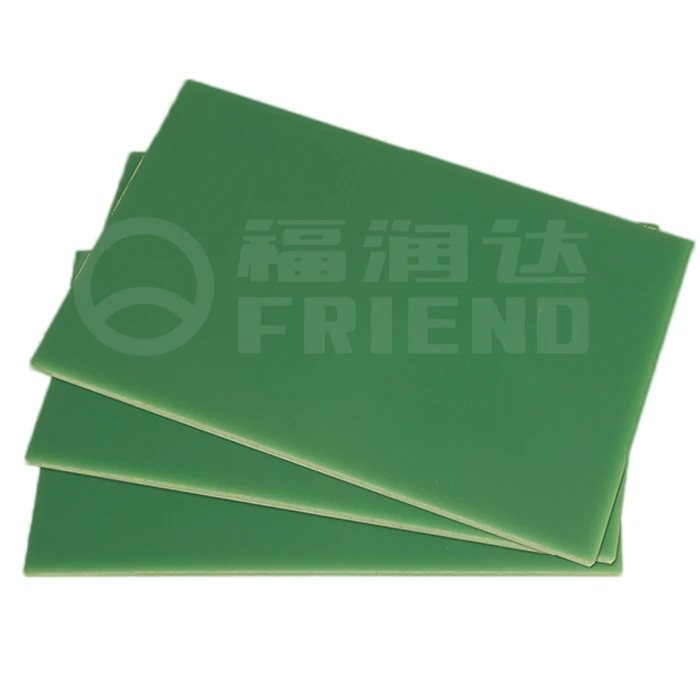
Similarly, our F883 (FR5) Epoxy Glass Fabric Laminated Sheets also offer flexibility in terms of gloss level. They are widely used in the electronics industry, and the ability to control the gloss level can be crucial for both functional and aesthetic reasons.
And then there are our F886 (EPGC308) Epoxy Glass Fabric Laminated Sheets. These sheets are suitable for a range of applications, and we can fine - tune the gloss level to ensure they meet your exact needs.
Measuring the gloss level of EPOXY UL is relatively straightforward. You can use a gloss meter, which works by shining a light at a specific angle onto the surface and measuring the amount of reflected light. This gives you an accurate reading of the gloss level in gloss units.
If you're unsure about what gloss level is right for your application, don't worry. Our team of experts is here to help. We can provide you with samples of different gloss levels so you can see and feel the difference for yourself. We can also offer advice based on our extensive experience in the industry.
In addition to the aesthetic aspect, the gloss level of EPOXY UL can also have some practical implications. For example, a high - gloss surface may be more prone to showing scratches and fingerprints, while a low - gloss surface can be more forgiving in this regard. So, it's important to consider these factors when choosing the right gloss level for your project.
To sum it up, the gloss level of EPOXY UL is an important characteristic that can be customized to suit your specific needs. Whether you're looking for a high - end shiny finish or a more subdued matte look, we've got you covered.
If you're interested in our EPOXY UL products or want to discuss the gloss level options further, feel free to reach out. We're always happy to have a chat and help you find the perfect solution for your project.
References
- General knowledge on epoxy materials and gloss measurement in the industry.
- In - house research and development data on EPOXY UL products.