

As a supplier of glass mat products, I've witnessed firsthand the growing demand for sustainable alternatives in the industry. Glass mat products, known for their strength, durability, and versatility, have long been a staple in various applications, from automotive and construction to electronics and aerospace. However, concerns about environmental impact, resource depletion, and regulatory requirements have prompted a search for more sustainable options. In this blog post, I'll explore some of the potential sustainable alternatives to glass mat products and discuss their viability in different industries.
Understanding Glass Mat Products
Before delving into sustainable alternatives, it's essential to understand what glass mat products are and why they are so widely used. Glass mat products are composite materials made from glass fibers bonded together with a resin matrix. The glass fibers provide strength and stiffness, while the resin matrix holds the fibers in place and protects them from damage. There are several types of glass mat products, including chopped strand mats, continuous filament mats, and woven roving mats, each with its own unique properties and applications.
One of the primary advantages of glass mat products is their high strength-to-weight ratio. They are lightweight yet strong, making them ideal for applications where weight reduction is critical, such as in the automotive and aerospace industries. Glass mat products are also resistant to corrosion, chemicals, and high temperatures, making them suitable for use in harsh environments. Additionally, they are relatively easy to manufacture and can be customized to meet specific design requirements.
However, glass mat products also have some drawbacks. The production of glass fibers requires significant energy and resources, and the disposal of glass mat products at the end of their life cycle can pose environmental challenges. Glass is not biodegradable, and recycling glass mat products can be complex and costly. As a result, there is a growing need for sustainable alternatives that can offer similar performance characteristics while minimizing environmental impact.
Sustainable Alternatives to Glass Mat Products
Natural Fiber Composites
Natural fiber composites are one of the most promising sustainable alternatives to glass mat products. These composites are made from natural fibers, such as flax, hemp, jute, and sisal, which are bonded together with a resin matrix. Natural fibers are renewable, biodegradable, and have a lower environmental impact compared to glass fibers. They also have a relatively low density, which can result in weight savings in certain applications.
Natural fiber composites offer several advantages over glass mat products. They are lightweight, have good mechanical properties, and are relatively easy to process. They can be used in a variety of applications, including automotive interiors, construction materials, and consumer products. However, natural fiber composites also have some limitations. They are less stiff and strong than glass mat products, and they are more susceptible to moisture and environmental degradation. Additionally, the quality and consistency of natural fibers can vary, which can affect the performance of the composites.
Recycled Fiberglass Composites
Recycled fiberglass composites are another sustainable alternative to glass mat products. These composites are made from recycled fiberglass, which is obtained from post-consumer or post-industrial waste. Recycling fiberglass reduces the demand for virgin glass fibers, conserves resources, and reduces waste. Recycled fiberglass composites can be used in a variety of applications, including automotive parts, construction materials, and industrial equipment.
Recycled fiberglass composites offer several advantages over glass mat products. They are cost-effective, have good mechanical properties, and are environmentally friendly. They can be used in applications where the performance requirements are not as high as those for virgin glass mat products. However, recycled fiberglass composites also have some limitations. The quality and consistency of recycled fiberglass can vary, which can affect the performance of the composites. Additionally, the recycling process can be complex and costly, and there may be limitations on the availability of recycled fiberglass.
Bio-Based Resins
Bio-based resins are another sustainable alternative to traditional petroleum-based resins used in glass mat products. These resins are made from renewable resources, such as plant oils, starches, and cellulose, and they have a lower environmental impact compared to petroleum-based resins. Bio-based resins can be used in combination with natural fibers or recycled fiberglass to create sustainable composites.
Bio-based resins offer several advantages over traditional petroleum-based resins. They are renewable, biodegradable, and have a lower carbon footprint. They also have good mechanical properties and can be used in a variety of applications. However, bio-based resins also have some limitations. They are often more expensive than petroleum-based resins, and their performance may not be as consistent as that of traditional resins. Additionally, the availability of bio-based resins may be limited, and there may be challenges in scaling up production.
Viability of Sustainable Alternatives in Different Industries
The viability of sustainable alternatives to glass mat products depends on several factors, including the specific application, performance requirements, cost, and availability. In some industries, such as the automotive and aerospace industries, where weight reduction and performance are critical, glass mat products may still be the preferred choice. However, in other industries, such as the construction and consumer products industries, where sustainability is a key consideration, sustainable alternatives may be more viable.
Automotive Industry
In the automotive industry, there is a growing demand for lightweight materials to improve fuel efficiency and reduce emissions. Glass mat products have traditionally been used in automotive applications, such as body panels, interior components, and under-the-hood parts. However, natural fiber composites and recycled fiberglass composites are increasingly being considered as sustainable alternatives.
Natural fiber composites offer weight savings and environmental benefits, but their mechanical properties may not be sufficient for some high-performance applications. Recycled fiberglass composites can offer similar performance to virgin glass mat products at a lower cost, but there may be limitations on the availability of recycled fiberglass. Bio-based resins can be used in combination with natural fibers or recycled fiberglass to create sustainable composites, but their cost and performance may need to be improved.
Construction Industry
In the construction industry, there is a growing demand for sustainable building materials that can reduce the environmental impact of construction projects. Glass mat products are commonly used in construction applications, such as roofing, insulation, and wall panels. However, natural fiber composites and recycled fiberglass composites are increasingly being considered as sustainable alternatives.
Natural fiber composites offer environmental benefits and can be used in applications where the performance requirements are not as high as those for glass mat products. Recycled fiberglass composites can offer similar performance to virgin glass mat products at a lower cost, and they can be used in a variety of construction applications. Bio-based resins can be used in combination with natural fibers or recycled fiberglass to create sustainable composites, but their cost and performance may need to be improved.
Consumer Products Industry
In the consumer products industry, there is a growing demand for sustainable products that are environmentally friendly and socially responsible. Glass mat products are commonly used in consumer products, such as furniture, appliances, and electronics. However, natural fiber composites and recycled fiberglass composites are increasingly being considered as sustainable alternatives.
Natural fiber composites offer environmental benefits and can be used in applications where the performance requirements are not as high as those for glass mat products. Recycled fiberglass composites can offer similar performance to virgin glass mat products at a lower cost, and they can be used in a variety of consumer products. Bio-based resins can be used in combination with natural fibers or recycled fiberglass to create sustainable composites, but their cost and performance may need to be improved.
Conclusion
As a supplier of glass mat products, I recognize the importance of sustainability in the industry. While glass mat products have many advantages, there is a growing need for sustainable alternatives that can offer similar performance characteristics while minimizing environmental impact. Natural fiber composites, recycled fiberglass composites, and bio-based resins are all promising sustainable alternatives to glass mat products, but their viability depends on several factors, including the specific application, performance requirements, cost, and availability.
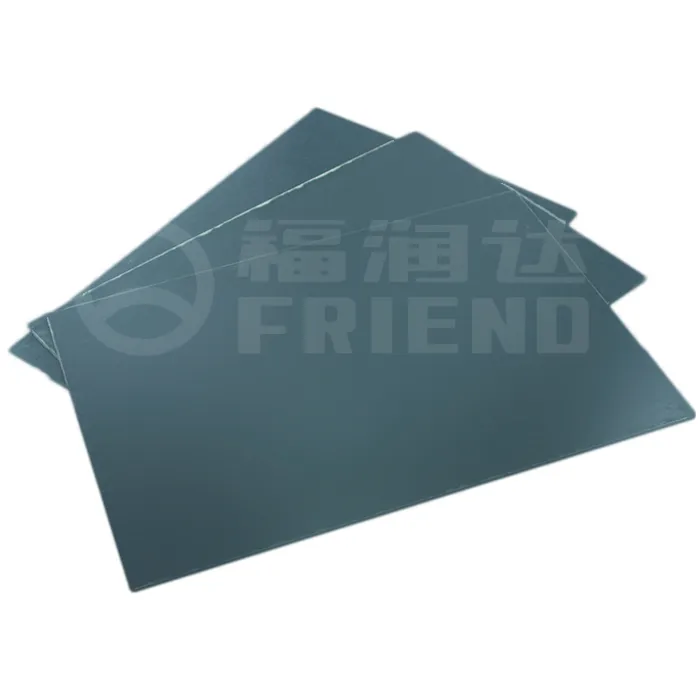

At our company, we are committed to providing our customers with sustainable solutions that meet their needs. We offer a range of glass mat products, including F828 (CEM-1), F863 (EPGM203) Epoxy Glass Mat Products, and F897 (Magnetic) Magnetic Laminate, as well as sustainable alternatives. We are constantly researching and developing new products and technologies to improve the sustainability of our offerings.
If you are interested in learning more about our glass mat products or sustainable alternatives, please contact us to discuss your specific requirements. We look forward to working with you to find the best solution for your application.
References
- John, M. J., & Thomas, S. (2008). Biofibres and biocomposites. Carbohydrate Polymers, 71(3), 343-364.
- Pickering, K. L., Efendy, M. G. A., & Le, T. M. (2016). A review of recent developments in natural fibre composites and their mechanical performance. Composites Part A: Applied Science and Manufacturing, 83, 98-112.
- Sgriccia, M., Kenny, J. M., & Sarasini, F. (2010). Green composites: A brief review. Composites Part A: Applied Science and Manufacturing, 41(7), 703-709.