

Sizing plays a pivotal and multi - faceted role in glass mat products. As a glass mat product supplier, understanding these roles is fundamental to delivering high - quality products that meet the diverse needs of our customers.
1. Adhesion Enhancement
One of the primary functions of sizing in glass mat products is to improve the adhesion between the glass fibers and the resin matrix. Glass fibers, in their natural state, have a smooth surface that does not bond well with most resins. The sizing acts as a bridge, creating a chemical bond between the two materials.
When producing glass mat products like our F828 (CEM - 1), the sizing ensures that the resin adheres firmly to the glass fibers. This is crucial as it enhances the mechanical properties of the final product. For example, in a printed circuit board application where F828 (CEM - 1) is commonly used, a strong bond between the glass mat and the resin is necessary to withstand the mechanical stresses during the manufacturing process and in actual use. If the adhesion is poor, delamination may occur, leading to a significant reduction in the product's performance and reliability.

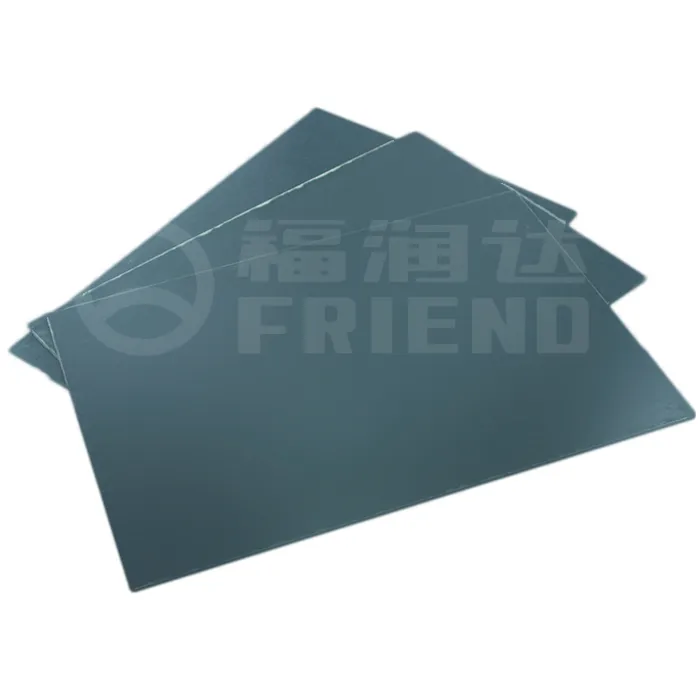
The chemical composition of the sizing is carefully designed to interact with both the glass surface and the resin. For epoxy - based glass mat products such as our F862 (EPGM306) Epoxy Glass Mat Products, the sizing contains functional groups that can react with the epoxy resin. This reaction forms a covalent bond, which is much stronger than a simple physical interaction. As a result, the glass mat and the epoxy resin form a unified structure, improving the overall strength and stiffness of the product.
2. Protection of Glass Fibers
Glass fibers are inherently brittle and can be easily damaged during handling, processing, and transportation. Sizing provides a protective coating on the surface of the glass fibers, preventing them from abrasion and breakage.
During the manufacturing process of glass mat products, the fibers are often subjected to mechanical forces such as stretching, bending, and shearing. The sizing acts as a lubricant, reducing the friction between the fibers and the processing equipment. This not only protects the fibers from damage but also improves the processing efficiency. For instance, when the glass fibers are being woven or laid into a mat, a well - sized fiber can move smoothly through the machinery, reducing the likelihood of fiber breakage and ensuring a uniform mat structure.
In addition, the sizing can also protect the glass fibers from environmental factors such as moisture and chemicals. Moisture can penetrate the glass fibers and cause corrosion, which weakens the fibers over time. The sizing forms a barrier that prevents moisture from reaching the glass surface. In some industrial applications where the glass mat products are exposed to harsh chemical environments, the sizing can also resist the attack of certain chemicals, maintaining the integrity of the glass fibers.
3. Compatibility with Processing Conditions
Sizing is formulated to be compatible with different processing conditions used in the production of glass mat products. Different types of glass mat products require different processing methods, such as compression molding, injection molding, or hand - layup.
For products like F897 (Magnetic) Magnetic Laminate, which may be processed using specialized techniques to incorporate magnetic properties, the sizing must be able to withstand the high temperatures and pressures involved in the manufacturing process. The sizing should not decompose or lose its functionality under these conditions. Otherwise, it may lead to defects in the final product, such as voids or uneven distribution of the magnetic particles.
Moreover, the sizing can also affect the flowability of the resin during processing. In injection molding, for example, the sizing can influence the viscosity of the resin - glass fiber mixture. A well - designed sizing can ensure that the resin flows smoothly through the mold cavity, filling all the corners and edges without leaving any voids. This is essential for producing high - quality glass mat products with precise dimensions and uniform properties.
4. Improvement of Surface Properties
The surface properties of glass mat products are also significantly influenced by the sizing. The sizing can modify the surface energy of the glass fibers, which affects the wetting behavior of the resin. A lower surface energy of the sized glass fibers allows the resin to spread more easily over the fiber surface, improving the wetting and impregnation process.
In addition, the sizing can also enhance the surface smoothness of the glass mat products. A smooth surface is desirable in many applications, such as in the production of composite parts for automotive or aerospace industries. A smooth surface not only improves the aesthetic appearance of the product but also reduces the drag in fluid - flow applications. For example, in the production of aircraft components made from glass mat composites, a smooth surface can reduce air resistance, improving the fuel efficiency of the aircraft.
5. Influence on Product Performance
The role of sizing ultimately has a profound impact on the performance of glass mat products. By improving adhesion, protecting the fibers, ensuring compatibility with processing, and enhancing surface properties, the sizing contributes to the overall mechanical, thermal, and electrical properties of the products.
In terms of mechanical properties, as mentioned earlier, a strong bond between the glass fibers and the resin due to the sizing leads to higher strength and stiffness. This is crucial in load - bearing applications. For example, in the construction of bridges or buildings, glass mat composites with good mechanical properties can provide reliable support.
Thermally, the sizing can also play a role. Some sizings are designed to have good thermal stability, which helps the glass mat products to maintain their properties at high temperatures. This is important in applications such as in the engine compartments of automobiles, where the components are exposed to high - temperature environments.
Electrically, in products like printed circuit boards, the sizing can affect the dielectric properties of the glass mat. A well - chosen sizing can ensure low dielectric loss and high insulation resistance, which are essential for the proper functioning of electronic devices.
Conclusion
In conclusion, sizing is an indispensable component in the production of glass mat products. Its roles in adhesion enhancement, fiber protection, compatibility with processing, improvement of surface properties, and influence on product performance are all crucial for delivering high - quality glass mat products. As a glass mat product supplier, we continuously invest in research and development to optimize the sizing formulations for our products such as F828 (CEM - 1), F862 (EPGM306) Epoxy Glass Mat Products, and F897 (Magnetic) Magnetic Laminate.
If you are interested in our glass mat products and would like to discuss your specific requirements or start a procurement process, we welcome you to reach out to us. We are committed to providing you with the best - quality products and services tailored to your needs.
References
- K. L. Lo, "Handbook of Glass Fiber Reinforced Plastics", McGraw - Hill, 2010.
- T. A. Osswald, "Molding Simulation for Injection Molding", Hanser Publications, 2012.
- R. M. Jones, "Mechanics of Composite Materials", Taylor & Francis, 2018.